

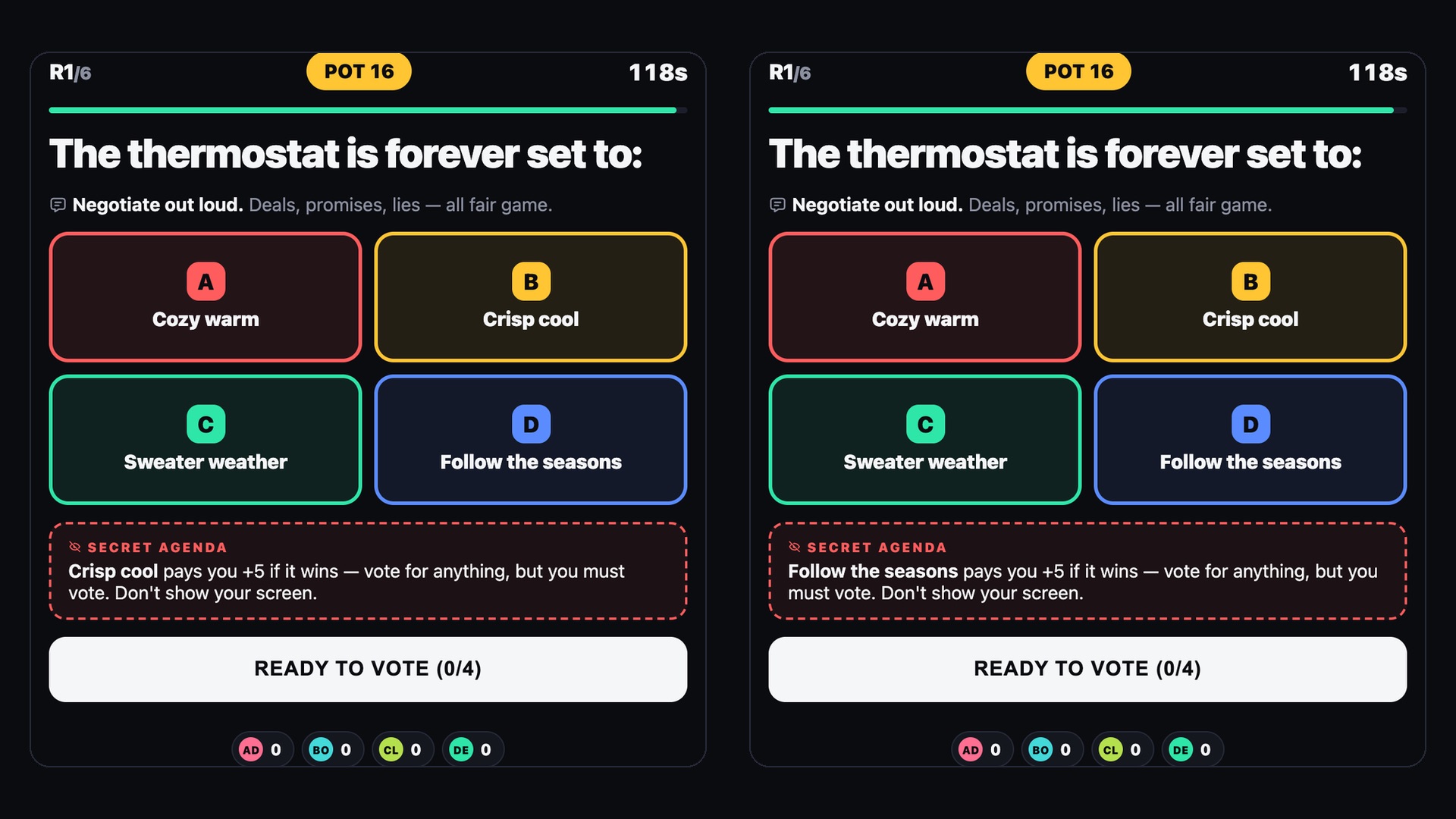
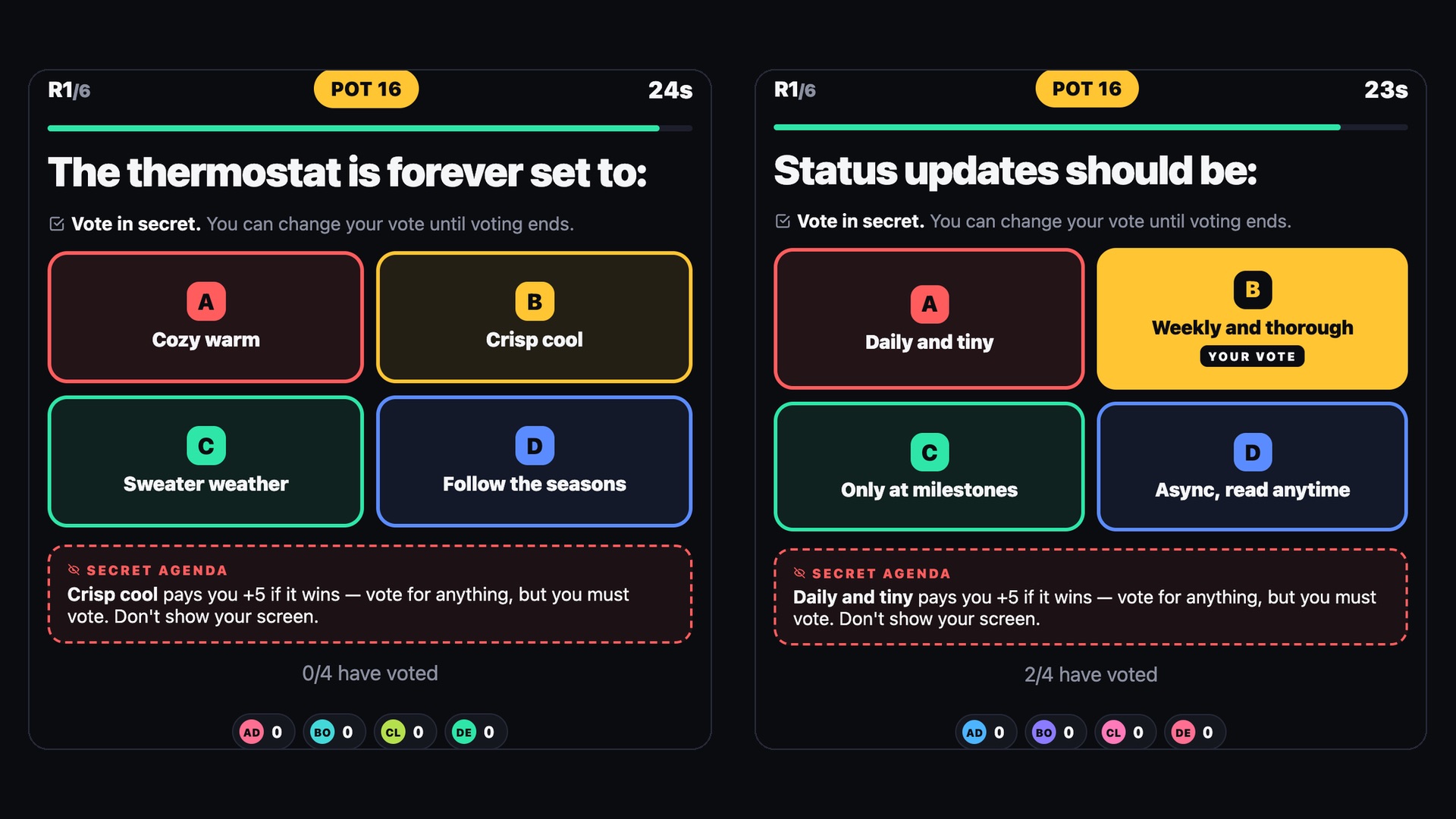
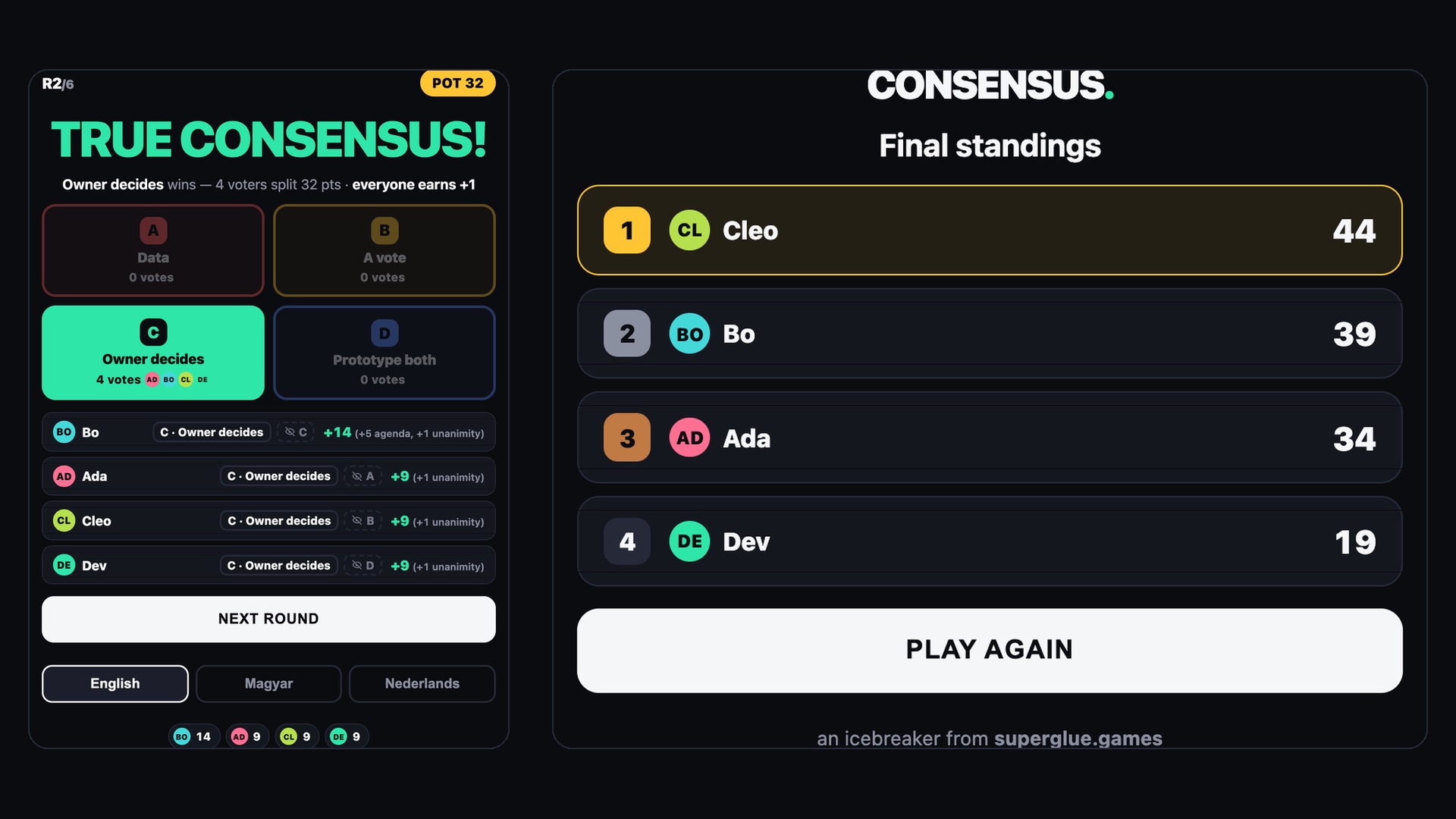
Six dilemmas, no right answers. Each round puts one opinionated question on every phone, with four options worth defending and a pot of points on the table. The official team snack, forever. How status updates should work. An option passes only on a strict majority, and if the room falls short, nobody scores.
Before anyone speaks, every player is dealt a private agenda: one option that pays them a bonus if the team lands on it, whether or not they voted for it themselves. The deal guarantees no option ever holds a natural majority, so the room has to talk. Promises and outright lies are both legal. Winning voters split the pot evenly, so a slim coalition pays each member far more than a unanimous room does. There's always someone worth cutting out, and whoever gets cut can block the next quorum.
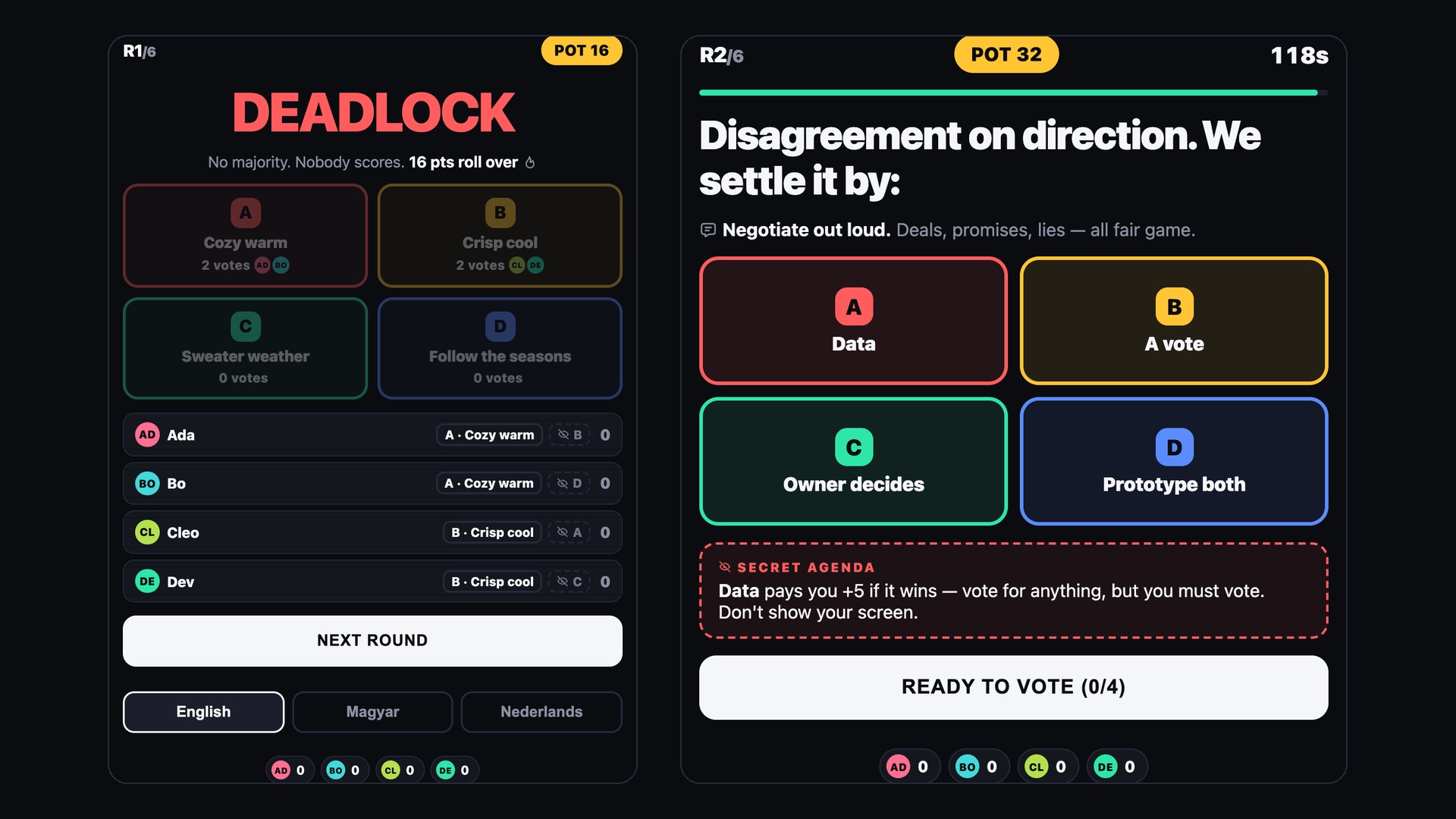
Deadlock rolls the entire pot forward, so holding out gets expensive for everyone until somebody folds. Votes and secret agendas both go up on screen after every round, and that's when the table finds out who was lobbying for whom. It runs about twelve minutes on phones and needs no moderator. The arguing is the point.
How to play
Step 1
Open a room
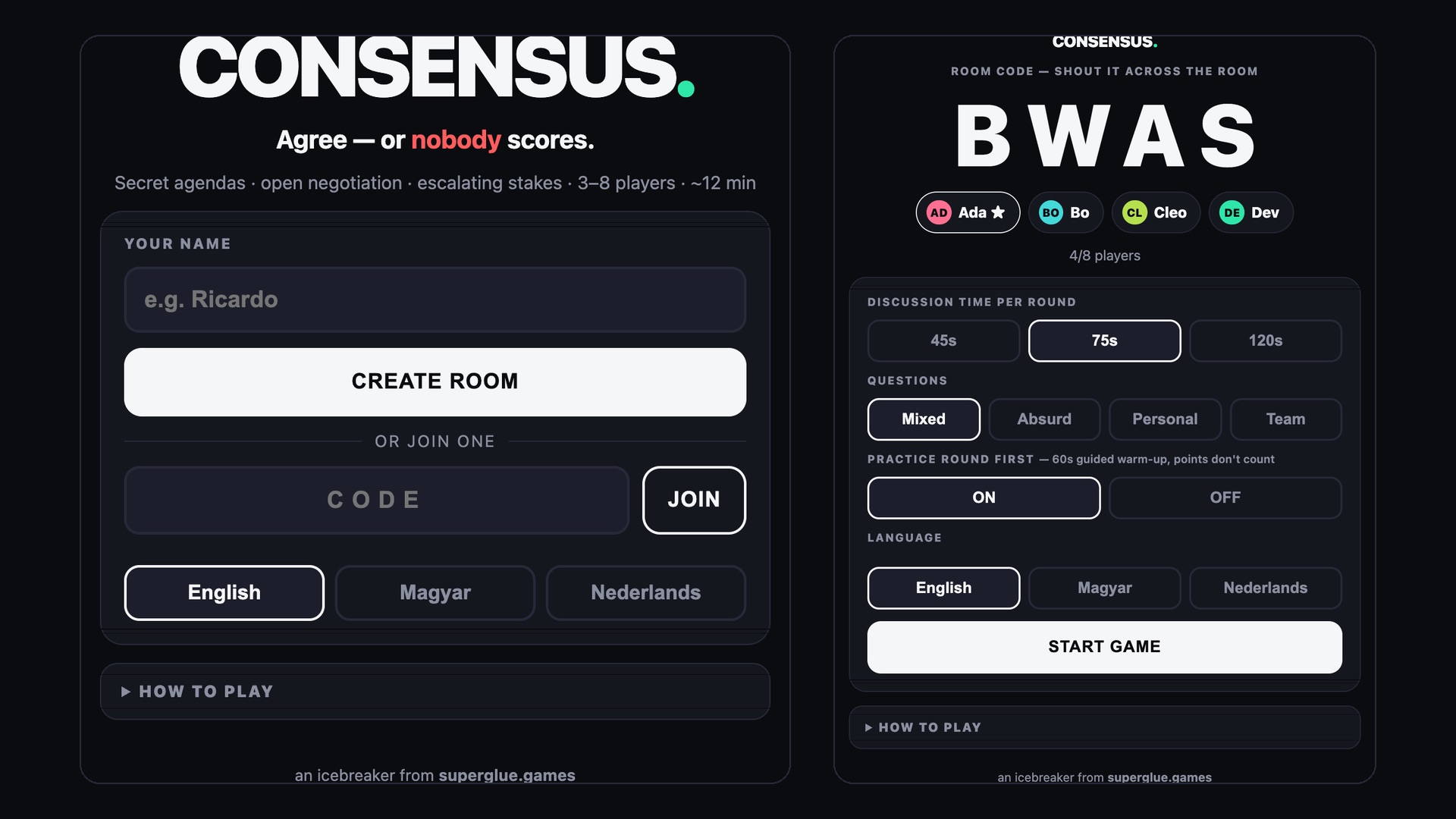
The host creates a room and reads the four-letter code out to the group. Everyone else joins on their own phone. No install, no account, three to eight players. A guided practice round is on by default and the host can switch it off.
Step 2
Read the dilemma
Each round shows the same question and the same four options to everyone, along with the pot at stake. The pot scales with the size of the table. Only a strict majority passes an option, and abstaining counts against it.
Step 3
Check your agenda
Your screen also shows a private card naming one option that pays you a bonus if the team picks it. Nobody else can see it. Argue for it openly, or lobby for it and vote somewhere else. Both are legal, but you have to cast a vote to collect.
Step 4
Talk it out
The host sets 45, 75 or 120 seconds per round, and the discussion happens out loud, in the room or on the call. Nothing said during it is binding. The game doesn't referee any of this, which is the whole idea.
Step 5
Vote, then watch the reveal
Votes are secret and you can change yours until the timer stops. Winning voters split the pot, a unanimous room banks a small bonus on top, and a deadlock rolls the pot into the next round. Then every vote and every agenda is revealed, and the next round starts with more on the table.
How your group joins
Step 1
Open the game
The game opens a room for you and shows an invite link in its lobby.
Step 2
Send the link
Copy the invite link from the lobby and paste it in your group chat, Slack, Teams or the meeting chat.
Step 3
Everyone joins
Players open the link, type a name and they are in. No account and no download. Only you need an account.
Take Consensus with you
The story, the facts and the artwork in a single PDF, ready for your deck or event proposal.
More from the library
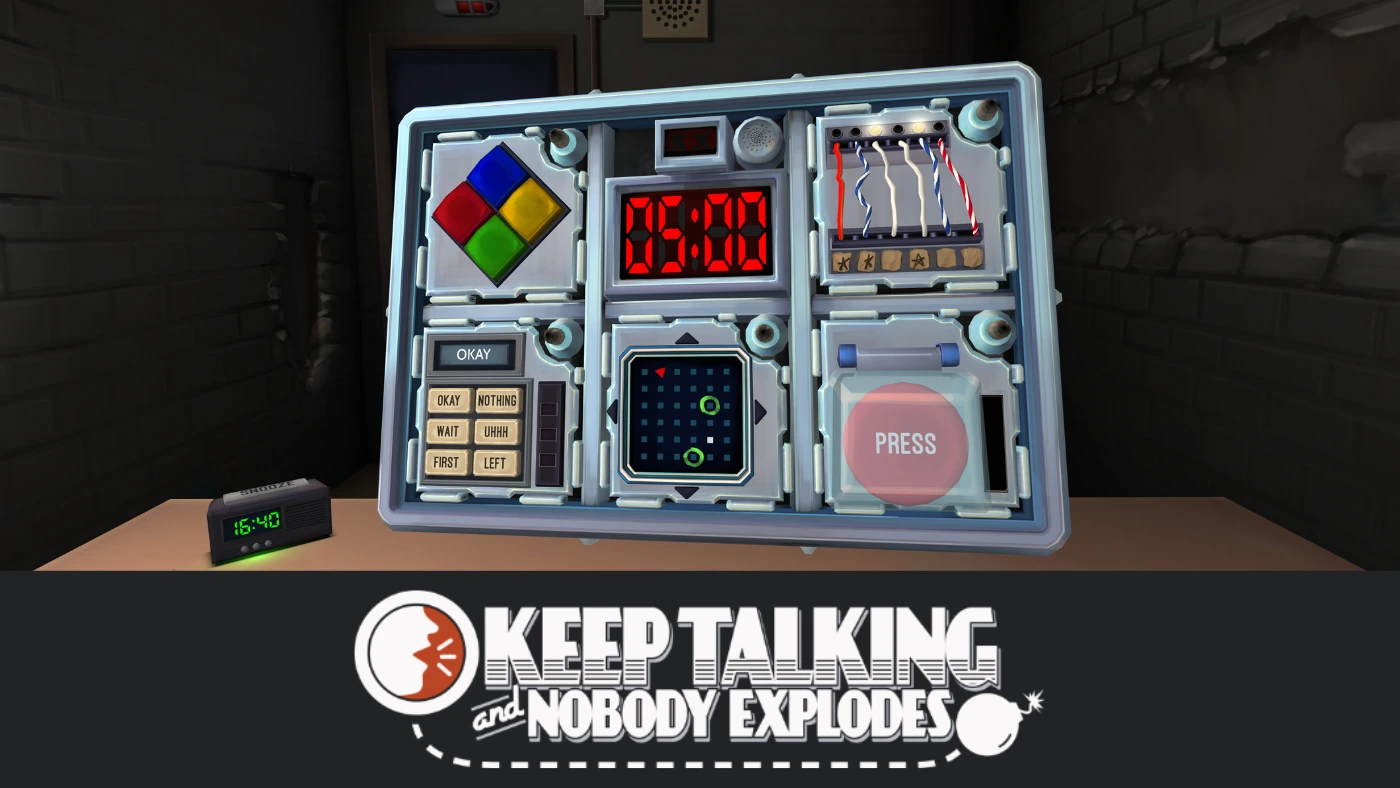
Keep Talking and Nobody Explodes
Defuse the bomb before time runs out — one sees it, the rest hold the manual.
Co-op · 4–20 players · 60–120 min

Marvelli's Last Show
Halloween 1938. One night only. The carnival gates just locked behind you.
Co-op · 2–8 players · ~90 min

North Pole Night Shift
The elves clocked out. Your team runs the workshop tonight.
Co-op · 2–8 players · ~90 min

The Last Human Office
The AI runs the building now. Prove humans still matter.
Co-op · 2–8 players · ~90 min
Backrooms Escape
Your video call just noclipped out of reality. The exit only opens for a team.
Co-op · 3–10 players · ~60 min

Ronin Realm
A cursed port, a legendary katana — and neither team escapes without the other.
Co-op · 2–8 players · ~60 min

Spirit Speak
The spirits left you clues. Play the melody right and the mansion lets you go.
Co-op · 2–8 players · ~60 min
Slender
One of you is Slenderman. The rest have eight pages to find before the forest keeps them.
Party · 2–8 players · ~10 min per round
ALIGNED
Guess together, laugh together. How aligned is your team really?
Party · 3–30 players · 15–45 min
Fire the Vibecoder
Someone on the team is vibecoding everything. Find them before the sprint ends.
Party · 3–10 players · ~10 min per round
Holloway
The house is bigger on the inside. Find the sigils, seal the door, get out together.
Co-op · 2–10 players · ~15 min per run
Sync Squad
Six robots, one exit. Nobody moves until everybody talks.
Co-op · 2–6 players · ~20–40 min
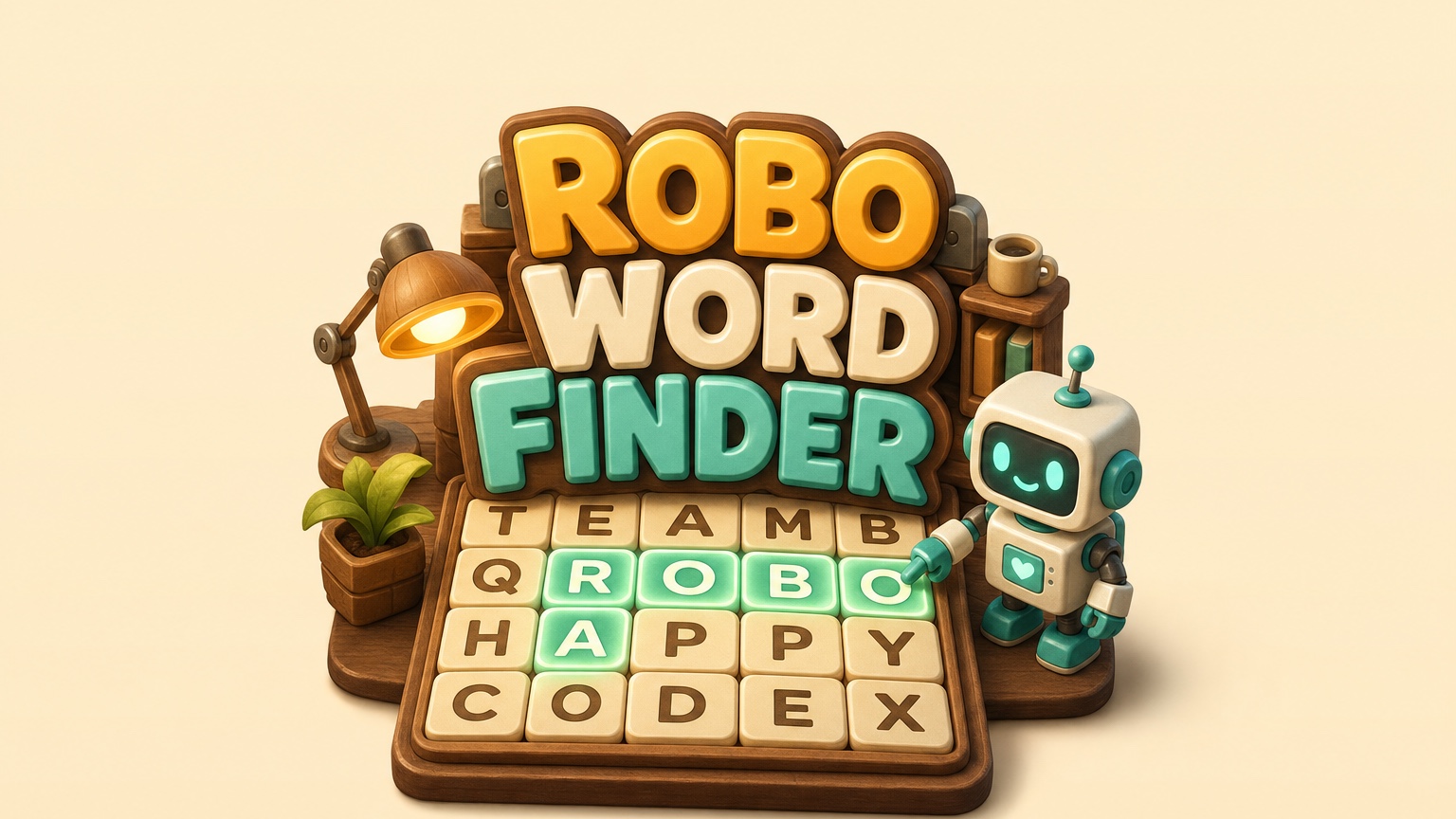
Robo Word Finder
Steer your robot across a giant letter board and spell words as a team. The letter picks are shared, so nobody hunts alone.
Co-op · 1–10 players · Endless rounds

Supernova
Your ship is crippled halfway to Khepri 5. Repair it, save the crew, retrieve the Seed.
Co-op · 2–8 players · ~60 min

Mind the Generation Gap
The founder is retiring and the succession code is sealed in the vault. Four generations stand between you and it.
Co-op · 3–10 players · ~60 min

Rise of the Mad Pharaoh
The professor stole a sarcophagus. Now the Pharaoh inside wants out.
Co-op · 1–8 players · ~60 min
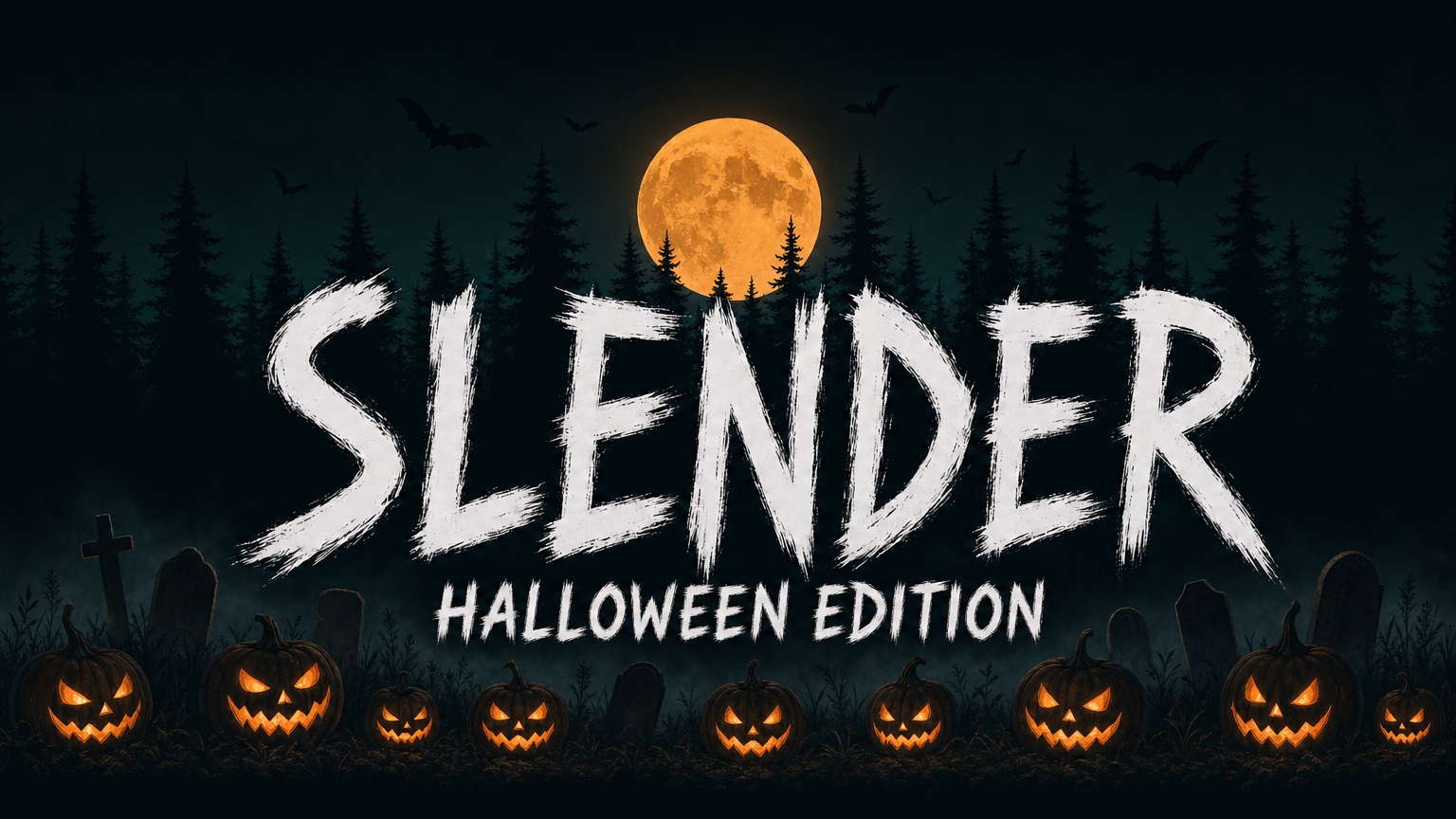
Slender Halloween Edition
One of you is Slenderman in a witch's hat. The rest have eight potions to find before Hallow's Hollow keeps them.
Party · 2–8 players · ~10 min per round

Rush Hour Market
A queue out the door and three minutes on the clock. Every grocer does every job.
Co-op · 1–4 players · 3 min per shift
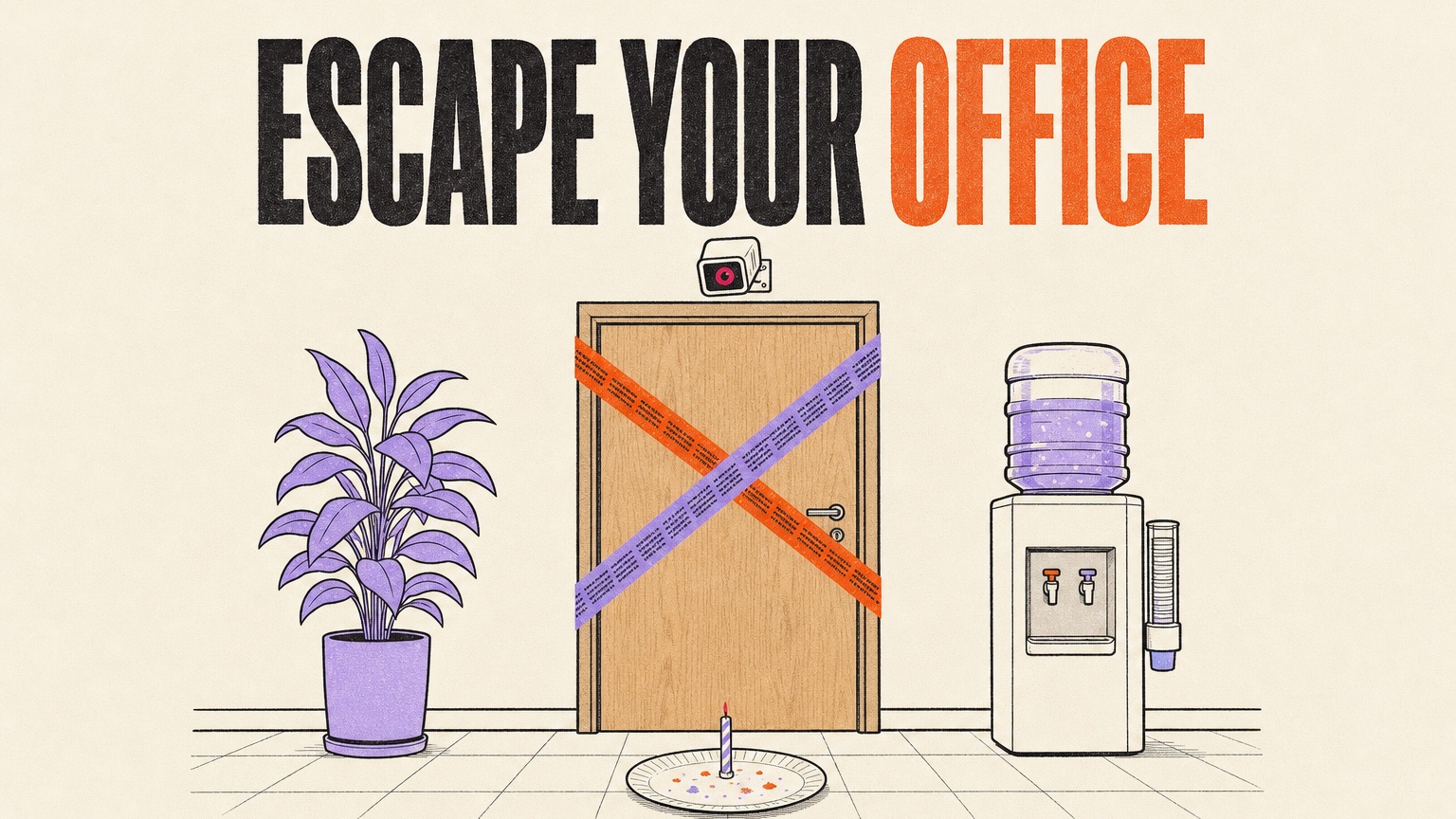
Escape Your Office
Friday, 17:52. The security bot sealed the floor over a missing cake. Get your team home for the weekend.
Co-op · 2–10 players · ~20 min